
Research
Many treat the current AI moment as a clean break with the past — whether the vision is utopian or dystopian, the premise is the same: a completely new world is at hand. I think our present is better interpreted through its continuities, as the second half of the computing revolution. If the first half produced the information age — overwhelming us with machine-generated data and rewarding those who could bend themselves around the machines — then what’s emerging now might be a transition toward a knowledge age, one where the premium shifts to those who can think across multiple competing knowledge systems rather than process information faster.
I’m testing that framework by building with it. I am developing a system of AI agents that explores a large corpus the way historians do — following sources, forming and refining interpretations over time rather than generating answers from conventional knowledge. If the framework has real explanatory power, the system should work. It will serve as both the research infrastructure for a book on AI strategy and a central example within it.
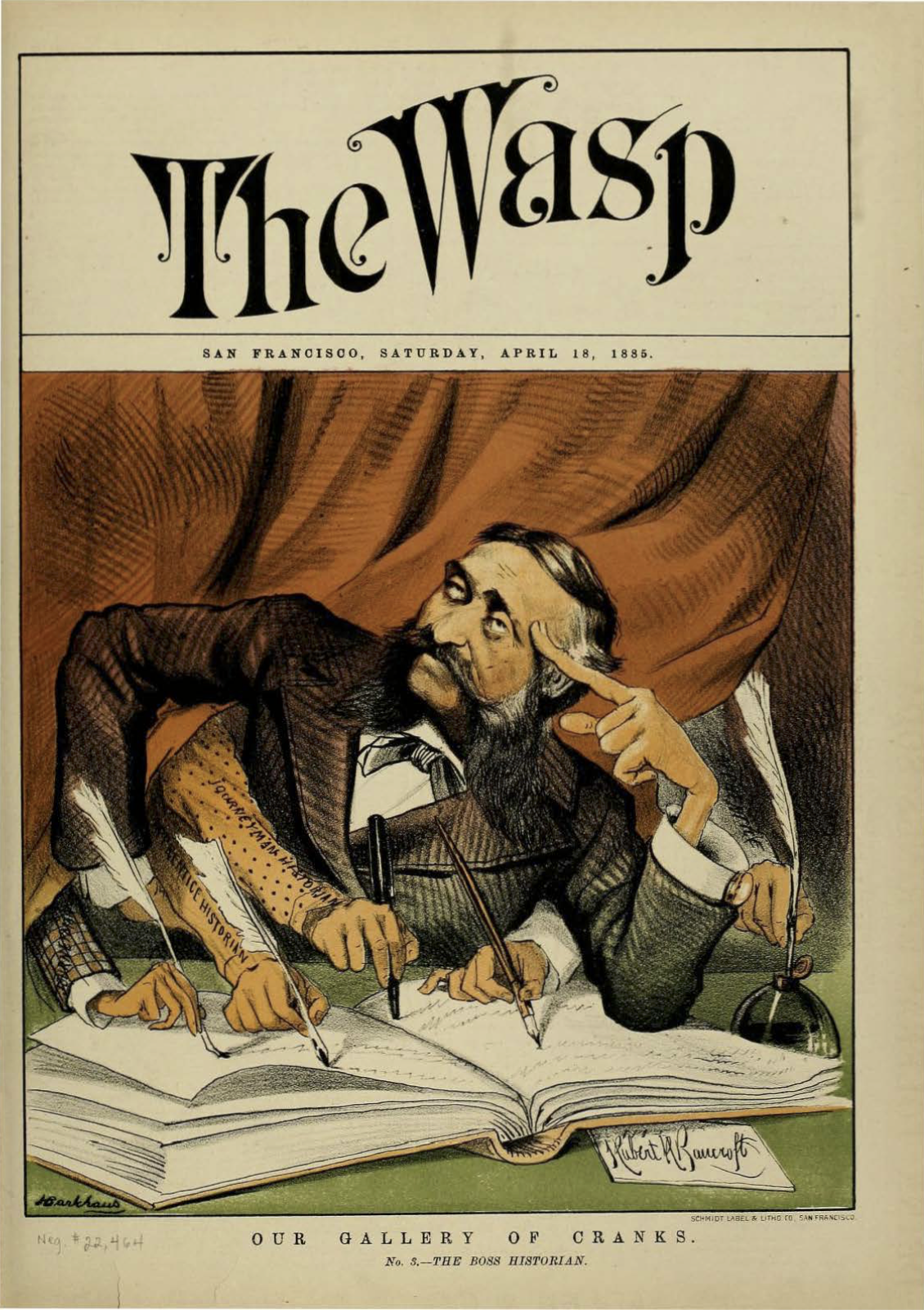
History, Inc. examines an earlier moment when new technologies and markets for knowledge outpaced the institutions trying to organize them. In the 1870s and 1880s, the California publisher Hubert Howe Bancroft marshaled a network of contributors to collect, research, write, and publish a 39-volume history of the American West. The illustration above, from an 1885 San Francisco weekly, depicts Bancroft as a historian with many hands writing — none of them his own. His company crumpled under the weight of its own success, just as universities and professional societies carved out the narrower, more durable disciplines around it. History, Inc. treats Bancroft’s forgotten experiment both as a history of knowledge production under disruption and as a case study in how people have tried to make strategic use of knowledge at scale when the old modes stopped working.